Pitfalls guide
Buying Property in Spain: the 8 Pitfalls That Cost Foreign Buyers Most
Almost nobody loses money in Spain by choosing the wrong town. They lose it in the four weeks between "we love it" and "we signed" — on a debt nobody mentioned, a tax that quietly became theirs, a deposit paid into an account with no guarantee behind it. None of it is exotic, and none of it is bad luck. Every one of these eight has a document that closes it, and every document can be asked for before you commit a single euro.
Debts follow the property, not the seller
Unpaid community fees stay attached to the home you just bought — the current year plus the three before it. The keys and the arrears arrive together.
Buy from a non-resident and their tax becomes yours
When the seller is a non-resident individual, Spanish law makes the buyer liable for the municipal capital gains tax on the sale. Not by agreement. By statute.
Off-plan money must be guaranteed from day one
Every euro you pay before completion has to sit in a separate account, backed by a bank guarantee or an insurance policy in your name. If nobody hands you that document, do not pay.
The price is never the price
Add roughly 10.7% on a resale and 13.2% on a new build for tax, notary, registry and legal fees. On a €300,000 home that is a second cheque of about €32,000 to €39,750.
The eight pitfalls, and what each one costs
These are not rare disasters. They are the routine failure points of a cross-border purchase, and we see the same eight over and over. Each is closed by a specific document, requested at a specific moment — which is the whole point of this guide.
| The pitfall | What it can cost | The document that closes it |
|---|---|---|
| Using the seller’s or agency’s lawyer | Everything below, unchecked | Your own engagement letter, with an independent lawyer |
| Not reading the nota simple | A mortgage, charge or embargo you inherit | Nota simple from the Land Registry, dated days before signing |
| Unpaid community fees | Current year + 3 years of arrears | Certificate of debt from the community administrator |
| Buying from a non-resident seller | Their municipal capital gains tax, by law | 3% retention (Modelo 211) plus plusvalía held back at completion |
| Off-plan payments with no guarantee | Every euro paid before completion | Individual bank guarantee or caución insurance policy |
| Budgeting the price, not the purchase | €32,000–€39,750 on a €300,000 home | A written all-in cost breakdown before you shortlist |
| Signing arras you did not understand | Your deposit, or the home | The private contract, read and explained, before any transfer |
| No licence of first occupation | A home you cannot legally connect or let | Licencia de primera ocupación / cédula de habitabilidad |
The pattern
Every single one is invisible from the photographs and obvious from the paperwork. A purchase goes wrong when somebody decides the paperwork can wait until after the deposit.
Pitfall 1: the lawyer who is not actually yours

You are buying in a country whose legal system you do not know, in a language you may not read, from people who all met each other before they met you. In that situation, the single most valuable thing you can own is a professional whose only client is you.
The convenient option is the lawyer the seller suggests, or the one the agency always uses. They are usually competent and often perfectly honest. They also have a relationship to protect that is older than the one they have with you, and their fee arrives whether or not the sale is a good idea for you.
- Instruct your own lawyer, chosen by you, before you sign anything — including the reservation.
- Ask directly who else in this transaction they act for, or have acted for. The answer should be nobody.
- Expect to pay around 1% of the purchase price (minimum roughly €1,500). It is the cheapest insurance in the whole file.
- Give a power of attorney only if you cannot attend, and only to your own lawyer, with the powers written narrowly.
The tell
If anyone tells you a lawyer is unnecessary because the notary checks everything, stop. The notary verifies identity, capacity and legality of the deed. The notary does not negotiate for you, does not chase the community debt certificate, and does not tell you the price is wrong for the property.
Pitfall 2: the debts that arrive with the keys
In Spain, some debts attach to the property rather than to the person who ran them up. Buy the home and you buy the liability. This is the pitfall that turns a bargain into an expensive lesson, and it is entirely visible in advance.
- 1
Get a nota simple, and get a fresh one
The Land Registry extract shows the registered owner, the exact description, and every charge on the property: mortgages, embargoes, easements, court annotations. Ask for one dated within days of signing, not the one from three months ago.
- 2
Demand the community debt certificate
Under Article 9.1.e of the Horizontal Property Act, the buyer answers with the property itself for the previous owner’s unpaid community fees, up to the current year plus the three calendar years before it. The seller is legally obliged to produce a certificate of the debt at the deed.
- 3
Check the IBI receipts
Ask for the last paid council tax receipt. Unpaid IBI can also be pursued against the property, and the receipt confirms the cadastral reference matches what you are buying.
- 4
Compare registry, cadastre and reality
Registered surface, cadastral surface and the home you walked around should describe the same thing. An enclosed terrace or an extra room that appears in none of them is unlicensed work, and legalising it becomes your problem.
Verified
Article 9.1.e of Ley 49/1960 (current wording since 16 June 2022): the buyer of a home under horizontal property answers with the property itself for the amounts owed by previous owners, limited to the elapsed part of the year of purchase and the three preceding calendar years.
Pitfall 3: paying the seller’s tax because nobody held it back
This one surprises even experienced buyers, because it feels wrong: taxes on the seller’s profit should be the seller’s problem. When the seller lives abroad, Spanish law disagrees — and it puts the bill on the buyer.
| Tax | Whose profit is taxed | Why it becomes the buyer’s problem |
|---|---|---|
| Non-resident income tax on the gain | The seller’s | The buyer must withhold 3% of the price and pay it to the tax office with Modelo 211, on account of the seller’s tax. Fail to withhold and the property answers for it. |
| Plusvalía municipal (municipal capital gains) | The seller’s | Article 106.2 of the Local Finance Act makes the buyer the substitute taxpayer whenever the seller is a non-resident individual. The town hall can come to you. |
What to do about it
Establish the seller’s tax residency early — before the private contract, not at the notary. If the seller is non-resident, the 3% retention and an amount to cover the plusvalía are held back from the price at completion and paid over. This is standard practice and no honest seller objects to it.
Verified in the consolidated texts: Article 106.2 of Royal Legislative Decree 2/2004 (wording in force since 17 October 2014) and the Spanish tax agency’s own guidance on the 3% retention, filed with Modelo 211.
Pitfall 4: off-plan money with nothing behind it
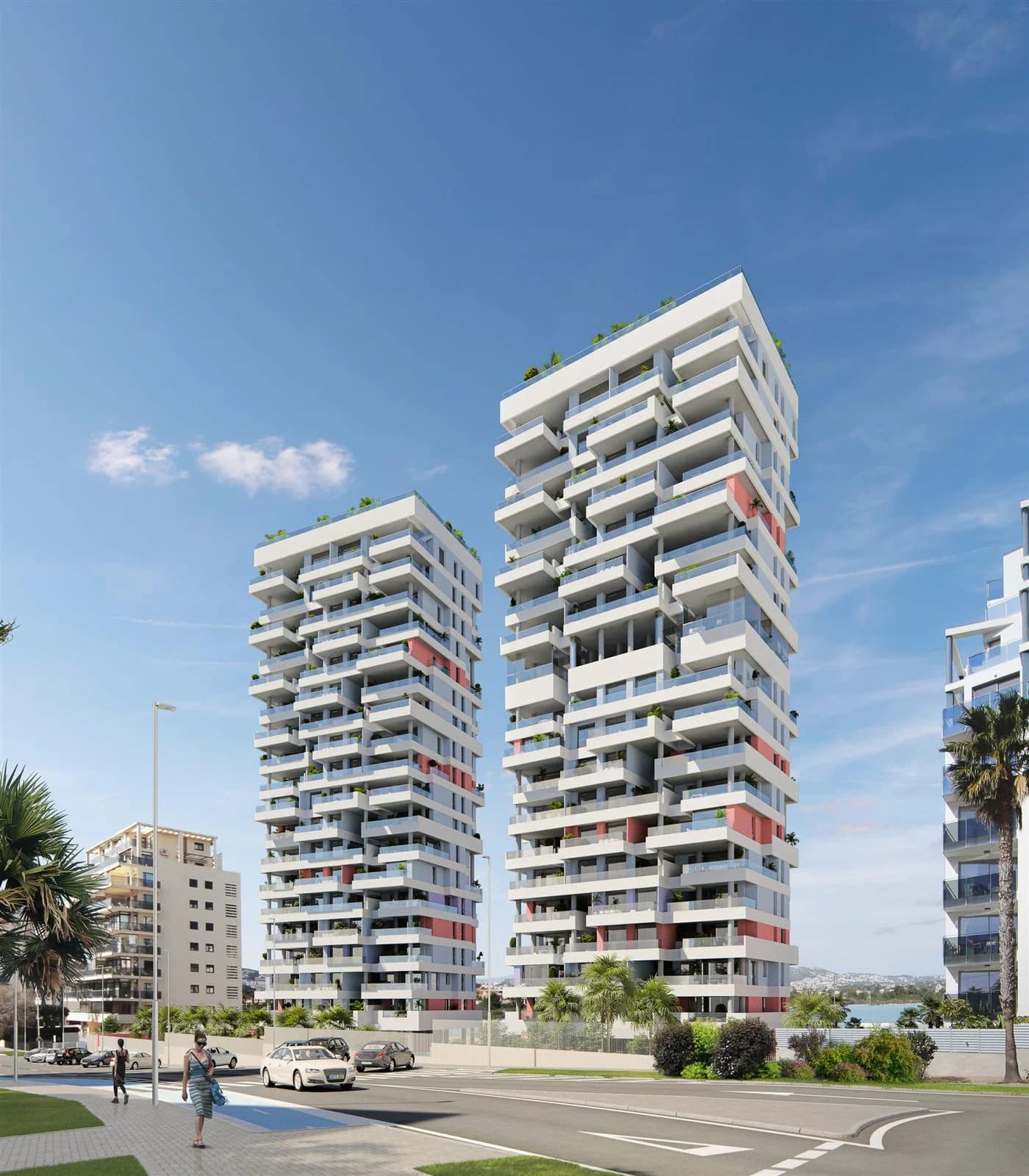
Buying off-plan means handing over real money for something that does not exist yet. Spanish law knows this, and it built a specific protection around it. The pitfall is not the law being weak. It is nobody asking for the document the law requires.
- The developer must guarantee the return of every amount you pay in advance, plus statutory interest, from the moment the building licence is obtained — through a caución insurance policy or a bank guarantee.
- An individual policy has to be issued for each buyer, identifying your specific property. A general document covering "the development" is not the same thing.
- Your money must go into a special account, held separately from the developer’s other funds, and usable only for building the homes.
- The guarantee covers the amounts paid including applicable taxes, plus the legal rate of interest.
The one question
Before the first transfer, ask for your individual guarantee document and the account details it refers to. If the answer is "it comes later", "the bank is processing it" or "we do it at the end", nothing else about the development matters until that changes.
Verified: First Additional Provision of Ley 38/1999 on Building Standards, in the wording given by Ley 20/2015 and in force since 1 January 2016.
Go deeper
How an off-plan purchase runs from reservation to keys, and what to check at each stage.
Read the off-plan guide →Ready for step one?
Prices are set by the developer and rise as construction progresses — today's price is the lowest.
Pitfall 5: budgeting the price instead of the purchase
The listing price is the smallest number in the file. Buyers who plan around it discover the rest at the worst possible moment — after the deposit is committed and the mortgage is sized.
| On a €300,000 home | Resale | New build |
|---|---|---|
| Purchase tax | ITP 9% = €27,000 | VAT 10% + AJD 1.4% = €34,200 |
| Notary, registry, lawyer, gestoría | ~€5,000 | ~€5,550 |
| Total on top | ~€32,000 (~10.7%) | ~€39,750 (~13.2%) |
| All-in | ~€332,000 | ~€339,750 |
- In the Valencian Community the general ITP rate on resale is 9% since 1 June 2026 (Ley 5/2025), and 11% above €1,000,000.
- New build is never subject to ITP: it carries 10% VAT plus 1.4% stamp duty instead.
- Declaring a price below the tax office’s reference value does not reduce the tax and creates a legal problem instead.
- Then the annual costs begin: IBI, community fees, insurance, and non-resident income tax filed on Modelo 210 even in a year you never let the property.
The full breakdown
Every acquisition and ownership cost, line by line, for resale and new build.
Read the cost guide →Pitfall 6: signing arras you did not understand
The contrato de arras is the moment the purchase becomes real. It fixes the price, the deadline and the penalty for walking away — and it is signed, in Spanish, at the point when everybody is in a hurry and emotionally committed. That combination is exactly why it goes wrong.
Article 1454 of the Civil Code is one sentence long, and it is the sentence your deposit depends on: if arras have been agreed, the contract may be rescinded with the buyer losing them, or the seller returning them doubled.
- Not every deposit is that kind of deposit. The same word covers agreements where walking away triggers damages, or where neither side may walk away at all. What applies is what the contract says.
- The deadline to complete is a real deadline. If your mortgage is not approved by then, the default position is that you lose the deposit.
- Make completion conditional in writing on the things that can still fail: mortgage approval, a clean nota simple, the licence of first occupation, the community debt certificate.
- Never transfer a reservation or deposit to a private individual’s account, or to an agency account with no client-money protection, before your lawyer has read the contract.
Where the money actually goes missing
Not to fraud, usually. To a deadline that was always too short, agreed by a buyer who had not yet applied for the mortgage.
The full sequence
Reservation, arras, deed and registration — who signs what, and when.
Read the legal process guide →Pitfall 7: the paperwork that stops a purchase dead
These do not usually cost money. They cost weeks, at the point where weeks are the one thing you do not have, because the arras deadline is running.
- 1
NIE before you need it
The foreigner identification number is required to buy, to pay the taxes and to register the property. Start it the moment you decide to buy, not when the notary asks for it.
- 2
A Spanish bank account
You will need one for the completion payment, the utilities and the taxes. Opening one as a non-resident takes longer than most buyers expect.
- 3
Licence of first occupation
On a new build, no licence means no legal connection of utilities. On a resale, its absence can reveal work that was never legalised. Ask for the document, not for reassurance.
- 4
Energy performance certificate
The seller must provide it. Its absence is minor in itself and a useful signal about how the rest of the file has been kept.
- 5
Utility contracts and their arrears
Check they exist, are in the seller’s name and are paid, and agree at the deed how they transfer.
The distance problem
Every one of these takes longer from another country, in another language, in August. This is precisely the gap that a buyer’s agent exists to close — and the reason the calendar, not the price, is what usually breaks a cross-border purchase.
Pitfall 8: the calendar that quietly makes you a Spanish taxpayer
The last pitfall arrives after completion, and it is the most expensive of all, because it is measured in your worldwide income rather than in fees.
Spend more than 183 days in Spain in a calendar year and you are a Spanish tax resident for that whole year. Not a visa question, not a padrón question: a counting question. And a perfectly legal Schengen pattern of 90 days in, 90 days out can add up to more than 183 days between January and December.
183
Days that trigger Spanish tax residency
Calendar year, sporadic absences added back in
90/180
Days a non-EU owner may stay
Rolling window, all Schengen countries combined
3%
Withheld from the price when the seller is non-resident
Paid to the tax office with Modelo 211
Count before you commit
How the two clocks work, which stay patterns are safe, and where the 183-day line falls.
Read the days-in-Spain guide →How we close all eight before you sign
None of this argues for buying somewhere else. It argues for buying with somebody whose job is to ask for these documents while there is still time to walk away — and to say so plainly when the answer is unsatisfactory.
We represent the buyer, not the seller and not the developer. We negotiate on your behalf: that means defending your position, your deadlines and your information, in your language, from here. It never means promising you a lower price, because on new build the developer sets the price and it only moves upwards.
Send us the property you are looking at and the stage you are at. We will tell you which of these eight are still open in your file, and what to ask for next.
Buyer representation · Legado Inmobiliaria
Registered agency (RAICV 6440) on the Costa Blanca. We review the file, request the documents and sit on your side of the table from the first viewing to the notary.
See how we represent buyersBefore you choose anyone
Nine questions that separate an agency working for you from one working for the seller.
Audit your agency in 9 questions →Free guide for foreign buyers
NIE, taxes, non-resident mortgages and the mistakes that cost buyers the most. We'll email it to you.
Frequently asked questions
What is the most common mistake foreign buyers make in Spain?
Relying on a lawyer introduced by the seller or the agency. Almost every other pitfall on this list is one that an independent lawyer, instructed before the reservation, would have caught.
Can I inherit the previous owner’s debts?
Yes, for some of them. Unpaid community fees follow the property: the buyer answers with the home itself for the current year plus the three calendar years before it. Registered charges such as mortgages and embargoes also stay with the property until cancelled.
Why would I pay the seller’s tax?
When the seller is a non-resident individual, Spanish law makes the buyer the substitute taxpayer for the municipal capital gains tax, and obliges the buyer to withhold 3% of the price for the seller’s non-resident income tax. Both are handled by holding the money back at completion.
Is off-plan buying in Spain safe?
It is, when the legal protection is actually in place. The developer must guarantee every advance payment with an individual insurance policy or bank guarantee from the moment the building licence is granted, and hold the money in a separate account. Ask for your document before the first transfer.
How much should I budget on top of the purchase price?
Around 10.7% on a resale and 13.2% on a new build, covering tax, notary, registry, legal fees and gestoría. On a €300,000 home that is roughly €32,000 to €39,750.
What happens if I pull out after signing the arras?
Under the standard penitential form, the buyer loses the deposit and the seller who pulls out returns it doubled. Other forms of deposit carry different consequences, so what governs is the wording of your contract.
Do I need to be in Spain to complete the purchase?
No. It can be completed through a power of attorney, which should be granted to your own lawyer and drafted with narrow, specific powers rather than general ones.
Can buying a property in Spain make me a tax resident?
Owning does not. Being here does. More than 183 days in a calendar year makes you a Spanish tax resident, and a legal 90-in-90-out Schengen pattern can exceed that without you noticing.
What single document should I never sign without?
A nota simple dated within days of signing. It shows who really owns the property and every charge registered against it, and it takes minutes to obtain.
Have questions?
Leave us your contact details and we'll reply within 24 hours.